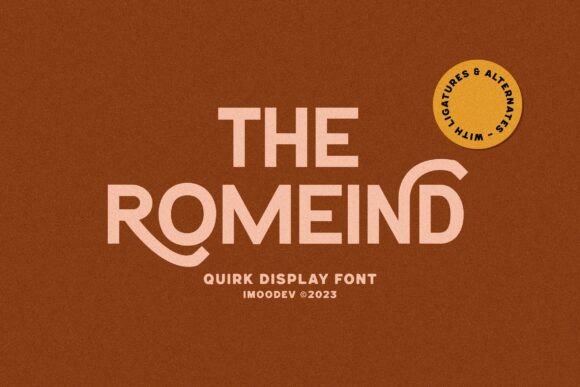
The Romeind: A Display Font That Balances Readability with Flair
Where Quirky Character Meets Practical Application
Finding a display font that grabs attention without sacrificing legibility can feel like a quest for a unicorn. Many decorative typefaces prioritize artistic expression at the expense of clear communication, especially at smaller sizes. This is precisely where The Romeind distinguishes itself. At its core, it’s a quirky display font with a dual personality. The standard character set is clean, structured, and surprisingly readable, providing a solid foundation for any project. But the magic happens when you activate its alternate characters. These glyphs feature flowing swashes and rhythmic extensions that inject a playful, almost theatrical energy into your typography.
This blend of order and whimsy makes The Romeind a uniquely versatile premium font. It’s not a simple script font or a rigid serif font; it’s a creative font that offers the best of both worlds. The structured base ensures your message gets across clearly, while the alternates allow you to dial up the personality exactly where you need it. This makes it an invaluable design asset for projects that demand both visual interest and functional clarity.
Real-World Applications: From Logos to Packaging
Understanding a font’s strengths is one thing; knowing exactly where to apply them is another. The Romeind truly shines in contexts where first impressions and brand personality are paramount. For logo design, the clean base characters create a mark that is memorable and easy to recognize, while a strategically placed swash can make the logo feel bespoke and handcrafted. Think of a boutique bakery or a creative studio—the font’s personality aligns perfectly with brands that value a touch of artisanal charm.
Its applications extend far beyond logos. Consider these practical uses:
- Editorial Design & Magazine Covers: The Romeind can set a dynamic and engaging tone for a headline, drawing readers into a feature story. Its readability at display sizes prevents the text from becoming a visual puzzle.
- Packaging Design: For products on a shelf, packaging design needs to communicate quickly and evoke emotion. This font’s playful alternates can suggest quality, creativity, or fun, helping a product stand out in a crowded market.
- Album & Poster Art: The theatrical quality of the swashes is ideal for cultural projects. It can give an album cover or event poster a distinct, rhythmic energy that hints at the content within.
- Digital Presence & Social Media: In the fast-scrolling world of social media graphics, a unique header font can stop a thumb. The Romeind works beautifully for Instagram stories, Pinterest pins, and YouTube thumbnails where personality is key. For web design, it’s best reserved for large hero text or impactful headlines, not body copy.
Ultimately, this is a font for lifestyle brands, boutique agencies, publishers, and creators who want their visual language to feel intentional and full of character. It helps build a brand identity that is both professional and approachable.
Making The Romeind Work for Your Project
Choosing the right font is a strategic decision. Here’s how to evaluate and implement The Romeind effectively. First, consider your project’s tone. If you’re aiming for sophisticated minimalism, this might not be the primary choice. But if the goal is to convey creativity, warmth, or a handcrafted sensibility, it’s a strong contender.
Next, test its readability in context. View it at the actual size it will be used—a 200px headline on a website is very different from a 12px subhead. The standard characters should remain clear and legible. When using the swash alternates, apply them judiciously. Overusing the decorative glyphs can clutter a design. Often, applying a swash to just the first letter of a word or a key word in a headline creates a focal point without overwhelming the viewer.
Font pairing is critical for a balanced design. The Romeind’s expressive nature means it pairs best with more neutral, complementary typefaces. A clean sans serif font for body copy or a simple serif font for supporting text will let the display font shine without creating visual competition. Avoid pairing it with other highly stylized handwritten fonts or busy scripts.
Finally, always review the font package. A quality commercial font like The Romeind should include a full set of alternates, stylistic sets, and likely multiple file formats for compatibility. Check the licensing to ensure it covers your intended use, whether for a single client project, unlimited commercial work, or digital products. By approaching its use thoughtfully, you can leverage The Romeind to elevate your modern typography and create designs that are both beautiful and effective.